
Deputy Water Resources and Irrigation Minister Talgat Momyshev outlined the next school-year activities at a Central Communications Service briefing.
English translation · Russian original
Eco-lessons are set to continue in educational institutions across Kazakhstan in the 2026–2027 academic year under the Adal Azamat unified character education programme. The new cycle is planned to include nine eco-lessons at Astana schools with ambassadors and heads of international organisations taking part, and with regions joining on a river-basin basis. Deputy Minister of Water Resources and Irrigation Talgat Momyshev announced this at a Central Communications Service press conference.
The cycle will be based on the Su Sandygy teaching and learning package, which comprises 17 thematic sections aimed at developing responsible water-use habits.
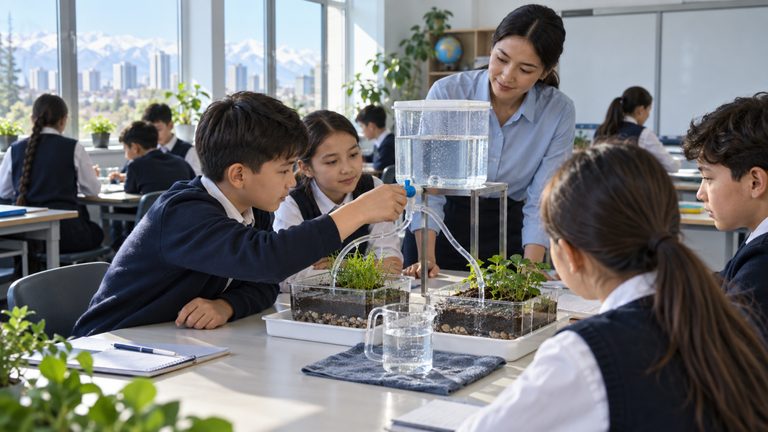
“This resource has been approved by the Ministry of Education's Y. Altynsarin National Academy of Education and recommended for use in educational institutions. One promising area is the creation of Kazakhstan's first Aqua Lab project in STEM education and environmental awareness at the Tanym supplementary education centre in Astana, using clubs, optional classes and project-based research. This format will connect careful water use with STEM education, practical research and students' project work. Another new strand of the project will be the preparation and distribution of seven environmental fairy tales entitled ‘The Adventures of Tamshy’,” the Deputy Minister said.
The programme will also publish an educational magazine, “Save Water – Preserve the Future!”, aimed at developing responsible water-use habits among children and young people.
One of the first events in the new educational cycle will be the Parents' Su Forum at School-Gymnasium No. 91 in Astana.
The event will bring together the leadership of Kazakhstan's Ministry of Water Resources and Irrigation, representatives of the Ministry of Education, parent committee chairs and international partners.
The event aims to establish lasting water-saving habits within families.